
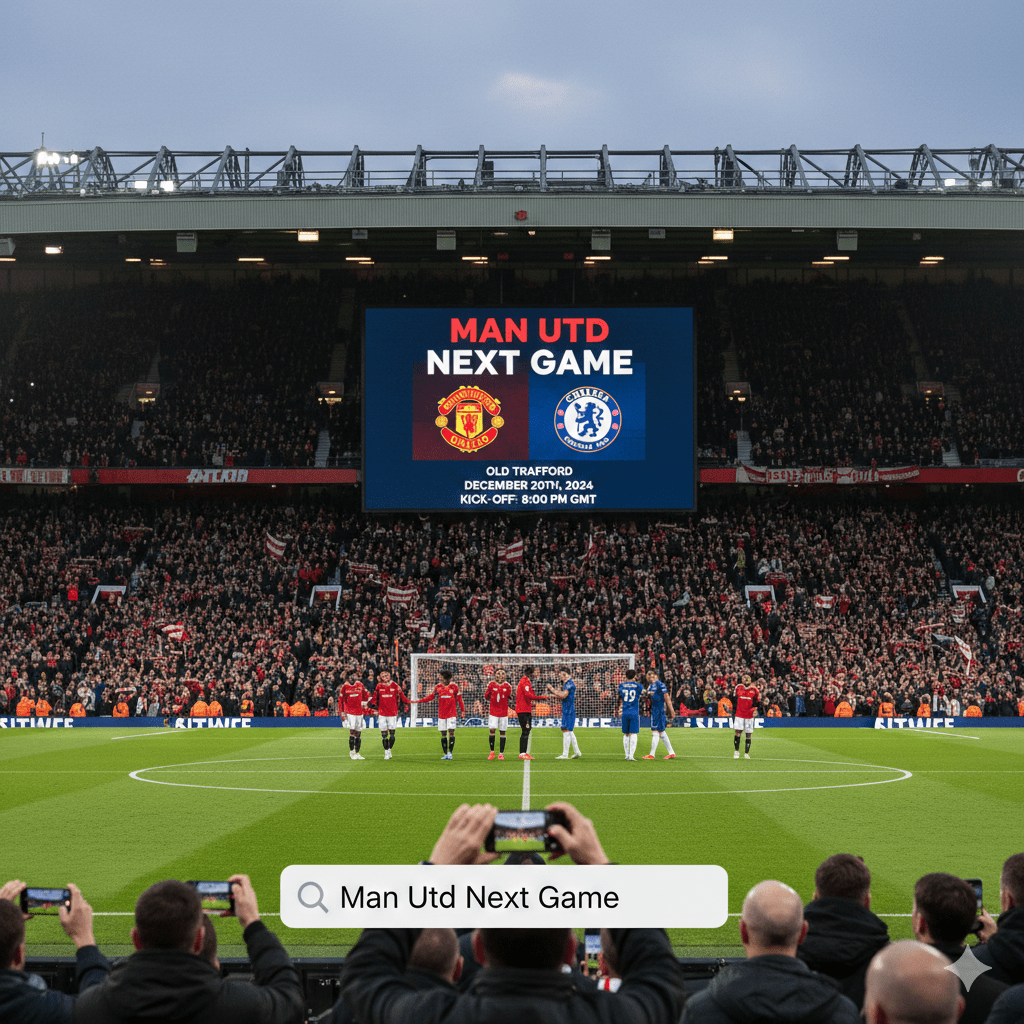
People search man utd next game to get one quick answer: who Manchester United plays next, when kickoff is, where it’s played, and which competition it sits in. The same intent shows up as next man utd game, when is man utd next game, when is the next man utd game, when is man united next match, and when is the next man united game. A strong hub treats these as one cluster, then answers them in the same simple layout every time.
Man Utd next game: what fans want in seconds
A “next match” page wins when it removes guesswork. For searches like next mufc match, next manutd match, and next match for man utd, fans usually check five things in one glance:
Opponent, date, kickoff time, competition, venue.
The cleanest way to show venue without extra wording is to use fixture-style formatting people already recognise. Home reads as “Manchester United vs [Opponent]”. Away reads as “[Opponent] vs Manchester United”. That single line answers the home or away question instantly, which is the whole point of man utd next game searches.
When is Man Utd next game: why time-focused wording is everywhere
Searches like when is man utd next game pop up when fans feel uncertain about time. Tight schedules, TV picks, and cup progress can move a slot, so people come back for confirmation even if they already know the opponent.
A helpful hub repeats the same next match details twice in two formats:
- a top match card for fast scanning
- a short paragraph underneath that states the date and kickoff time in plain language
That second line matters for mobile readers who skim quickly, then want one sentence they can trust.
Next Man Utd games: the next five fixtures view
Many supporters do not stop at one match. They plan around runs. That intent appears as man utd next games, man utd upcoming games, man u next fixtures, man u upcoming fixtures, mufc next fixtures, manchester united next fixtures, and upcoming manchester united fixtures.
A “next five fixtures” block should stay stable and compact. Each row should show date, opponent, venue, competition, and kickoff time. It can meet longer phrasing like man u next 5 fixtures today without trying to predict outcomes. It’s a planning tool, not a prediction page.
Man Utd fixtures and schedule: one page for every variation
The wider fixture terms all point to the same need: a full, scrollable list people can return to all season. That includes:
man utd fixtures, manchester united fixtures, man utd match fixtures, man utd football fixtures, man u fixtures, man u match fixtures, mu fixtures, mu fixture, mufc fixtures, united fixtures, fixtures united, plus schedule language like man utd schedule, schedule man utd, manchester united schedule, manchester united game schedule, and manunited schedule.
A good page does not split those into separate URLs. It uses the terms naturally in headings and early copy, then shows one consistent timetable-style list that reads like a calendar.
Man United fixtures and results: why the hub should include both
Fans often want “what’s next” and “what just happened” on the same visit. That’s why searches like man u fixtures and results, man united last fixtures, man u last fixtures, and manchester united matches appear beside next game queries.
A simple “recent results” strip with the last few games, scoreline, and competition is enough. The goal is quick recall. Deeper writing belongs on match report and player ratings pages, linked from the results row.
Monthly fixtures: December to April planning behaviour
Supporters think in month blocks, so month language shows up often: december, premier league december, january premier league, february premier league, march, april. A monthly filter helps fans spot a tough run, a travel-heavy stretch, or a busy cup period.
This is where “timetable” phrasing appears too. People treat the list like a personal plan and search manchester united time table or man united time table when they want a clear schedule view.
Premier League fixtures only: EPL wording fans type
A lot of people add league language to filter out cups. Common searches include Man Utd fixtures Premier League, mu epl fixtures, pl fixtures man utd, manchester united epl fixtures, epl manchester united fixtures, manchester united english premier league fixtures, and english premier league fixtures man united.
A Premier League-only section should keep the same layout as the main list. Consistency beats clever design here. Fans are scanning, not learning a new interface.
Cup and European fixtures: stage and leg terms to label clearly
Cup and Europe searches bring extra context words into the same fixture intent: europa, conference, league stage, knockout, play off phase, first leg, second leg. If those labels are missing, fans mix games up and lose trust in the page.
A clean hub shows the round or stage beside the match line. It prevents confusion during busy weeks when multiple competitions overlap.
Man United game today: today time, live status, and urgency
The “today” cluster behaves differently. People typing man united game today or today man united game want instant clarity, not a long read. Related terms include Manchester United game today, mu match today, mu today game, man u games today, man u play today, and time-first versions like Manchester United game today time.
The page should answer in one clear paragraph:
Is there a match today, who is it against, what time is kickoff, where is it played, and which competition is it.
Manchester United match today live: what the match window needs
Searches like Manchester United match today live usually happen close to kickoff or during the match. The hub should offer a match center section that carries:
status, scoreline, lineups, key events, and a short summary after full time.
This keeps the page useful before kickoff, during the match, and after it ends, without forcing fans to bounce around.
Manchester United game tomorrow: the calm planning window
Tomorrow intent is similar, just less urgent. Fans search Manchester United game tomorrow, man united match tomorrow, and man u match tomorrow to plan ahead. A dedicated tomorrow block should mirror the today block, then point readers to where the preview and lineups will appear inside your site.
Why kickoff times change: Sky Sports, TNT Sports, BBC, and updates
Fixture pages often show broadcast labels, so fans search with them in mind: sky sports, tnt sports, bbc. Kickoff times can shift through broadcasting selections, cup scheduling changes, and calendar conflicts.
A calm explanation helps the hub feel dependable. Many listings use UK time as a baseline, so a simple “times shown in UK time” note reduces confusion for international supporters.
Shorthand, misspellings, and multilingual fixture searches
People type fast. The same intent appears as man u fixtures, manu fixtures, mu fixtures, mufc fixtures, plus common slips like manchetser united fixtures, manchesyer united fixtures, and mancester united fixtures. A strong hub does not panic about spelling variants. It uses a few of the common shorthand phrases naturally, then lets the schedule do the work.
Some searches come in another language, like matchs de manchester united. The intent stays the same: match listings, dates, kickoff times. A clear, well-structured fixtures hub still satisfies that intent.
Conclusion
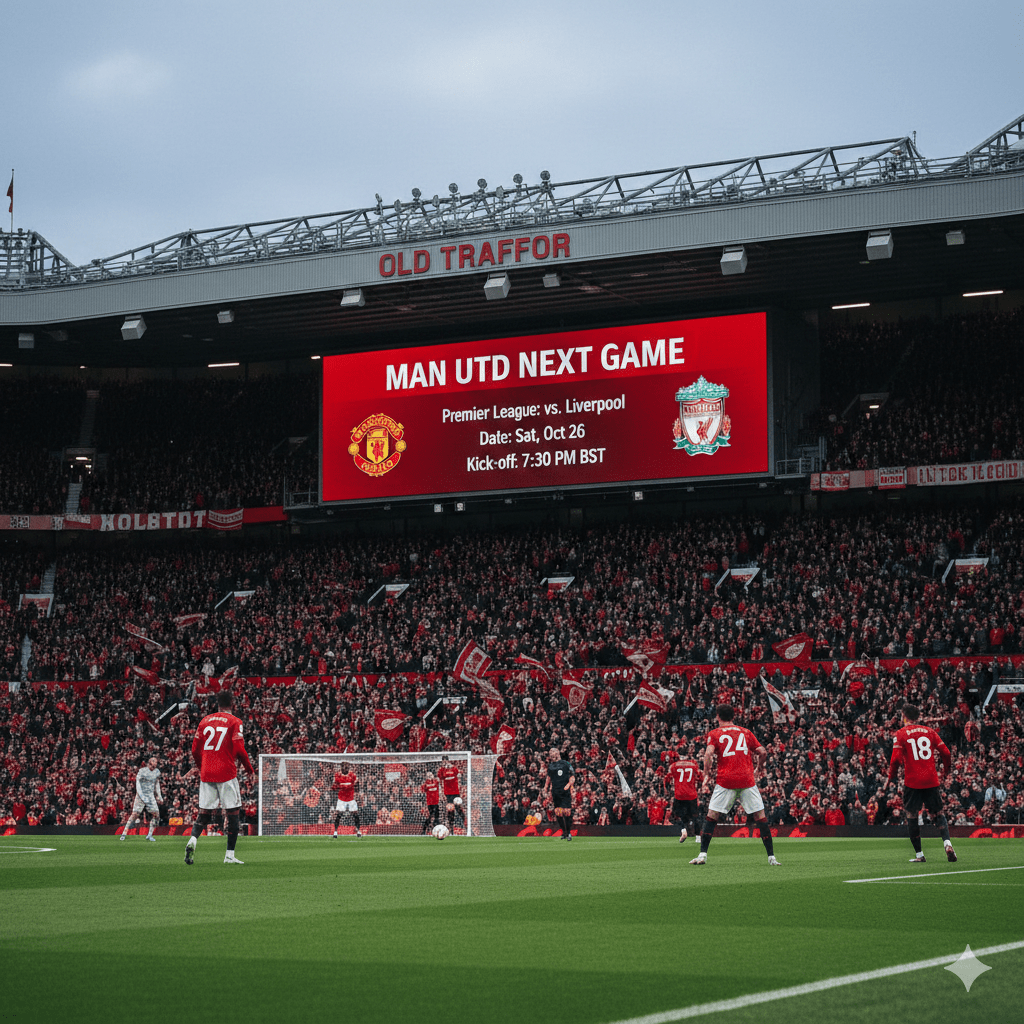
A complete man utd next game hub is simple at its core: a next match card, a next five fixtures block, a full fixtures schedule, a recent results strip, plus today and tomorrow match center sections. When the page labels competition, stage, and legs clearly, and keeps kickoff times in a consistent format, it covers the entire fixtures cluster without forcing fans to hunt.